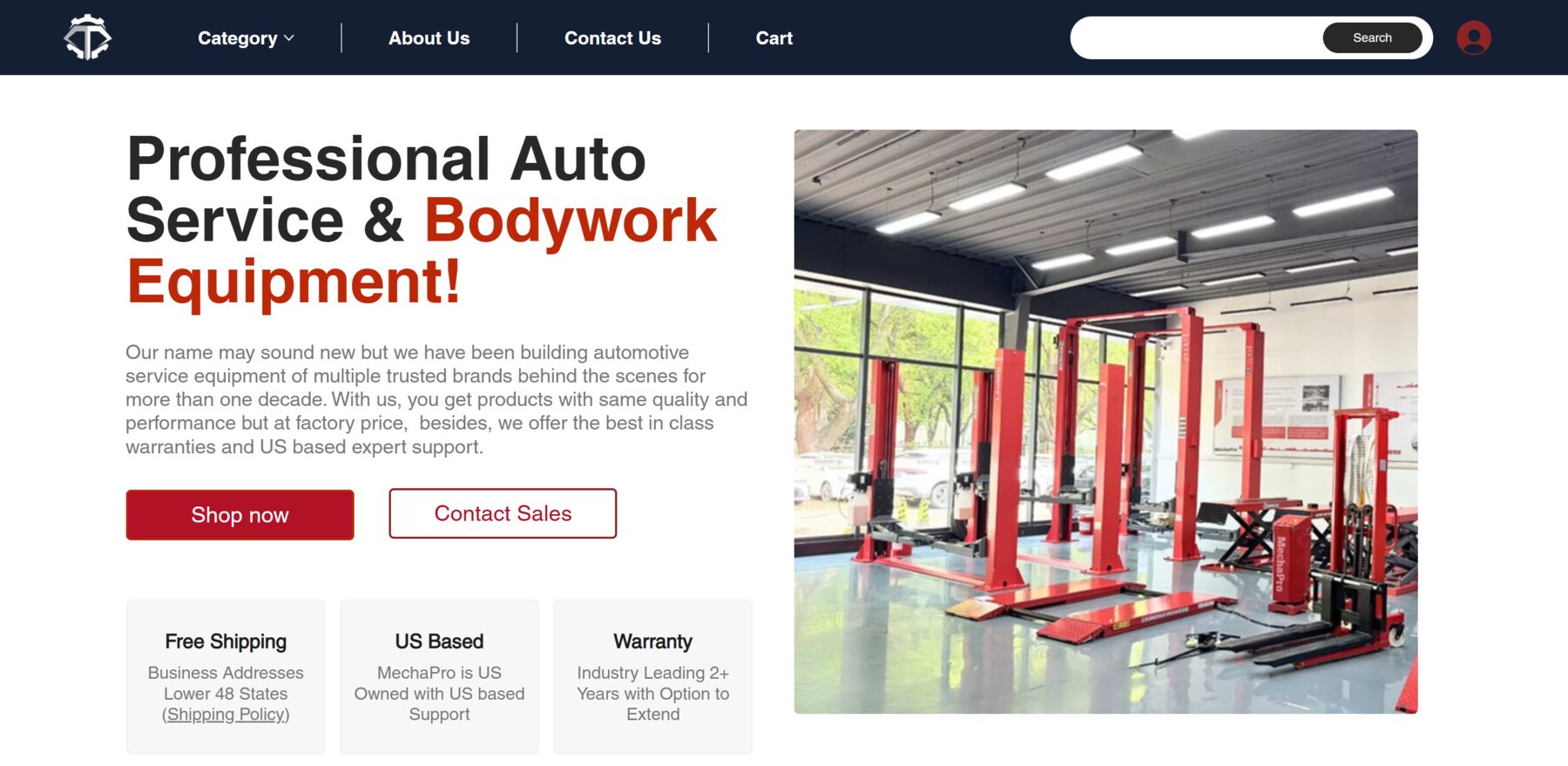
FIG. 01 — Homepage hero · navbar, value prop, trust pills · live at mechaproautoequipment.com
A B2B e-commerce platform for professional automotive shop equipment — vehicle lifts, wheel aligners, tire changers, spray booths, full-shop bundles. I designed the product architecture, buyer decision flows, product-page hierarchy, and configurator UX to turn a complex technical catalog into a structured buying experience. $38K+ revenue in 30 days · $9.7K average order value.
MechaPro Auto Equipment sells professional automotive shop equipment — vehicle lifts, wheel aligners, tire changers, wheel balancers, spray booths, body repair systems, air compressors, and complete garage equipment packages.
Unlike consumer e-commerce, MechaPro's customers are business owners making high-ticket purchasing decisions. Many products cost thousands or tens of thousands of dollars. Buyers need to compare technical specifications, understand configurations, evaluate warranty and support, and decide whether to purchase directly or contact sales. I designed the product architecture, decision flows, product page hierarchy, and configurator experience to make complex industrial equipment easier to understand, compare, and purchase.
Customers are evaluating business-critical equipment that has to fit their shop layout, vehicle type, service workflow, installation requirements, budget, and long-term operational needs.
How might we turn a complex technical product catalog into a clear, trustworthy, and conversion-focused B2B buying experience?
The site needed to support different types of buyers at the same time: customers who already knew the exact equipment they needed and wanted to compare specifications quickly; buyers opening or upgrading a full shop who needed bundled equipment solutions; and buyers not ready to check out online who needed a clear path to request a quote or contact sales.
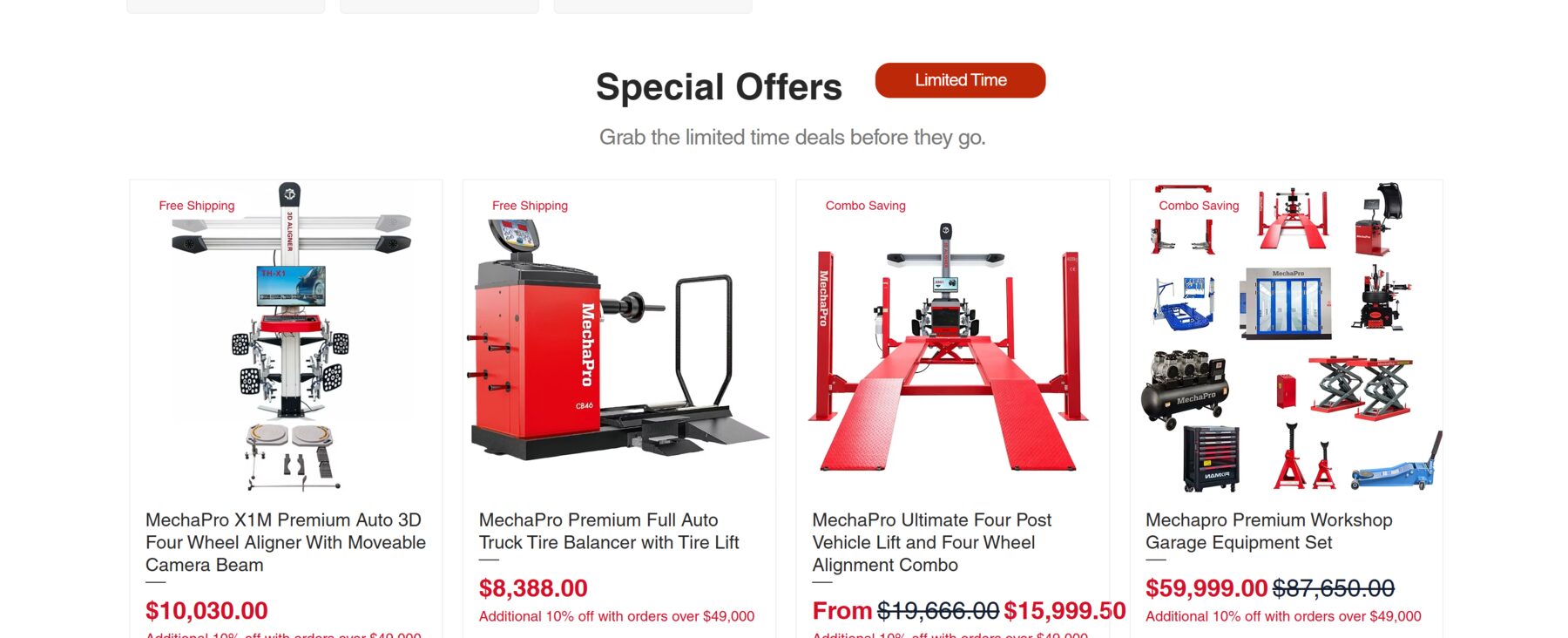
Equipment types and business use cases — not a flat product list. Garage owners think in workflows; the IA matches that.
Trust modules sit next to every conversion point. High-ticket buyers don't decide without proof of post-purchase support.
Some buyers want to click "Add to Cart". Others want a custom quote. Both paths are first-class — neither is a fallback.
MechaPro's catalog spans a wide range of technical equipment. I structured navigation around how garage owners actually think about their shop — by equipment role, not by SKU type.
Instead of presenting the catalog as a generic product grid, the experience guides buyers through equipment categories that match how garage owners and shop operators think about their workflow. "Sets & Combos" sits first — because the highest-value buyer is the one building or upgrading an entire shop, not buying a single machine.
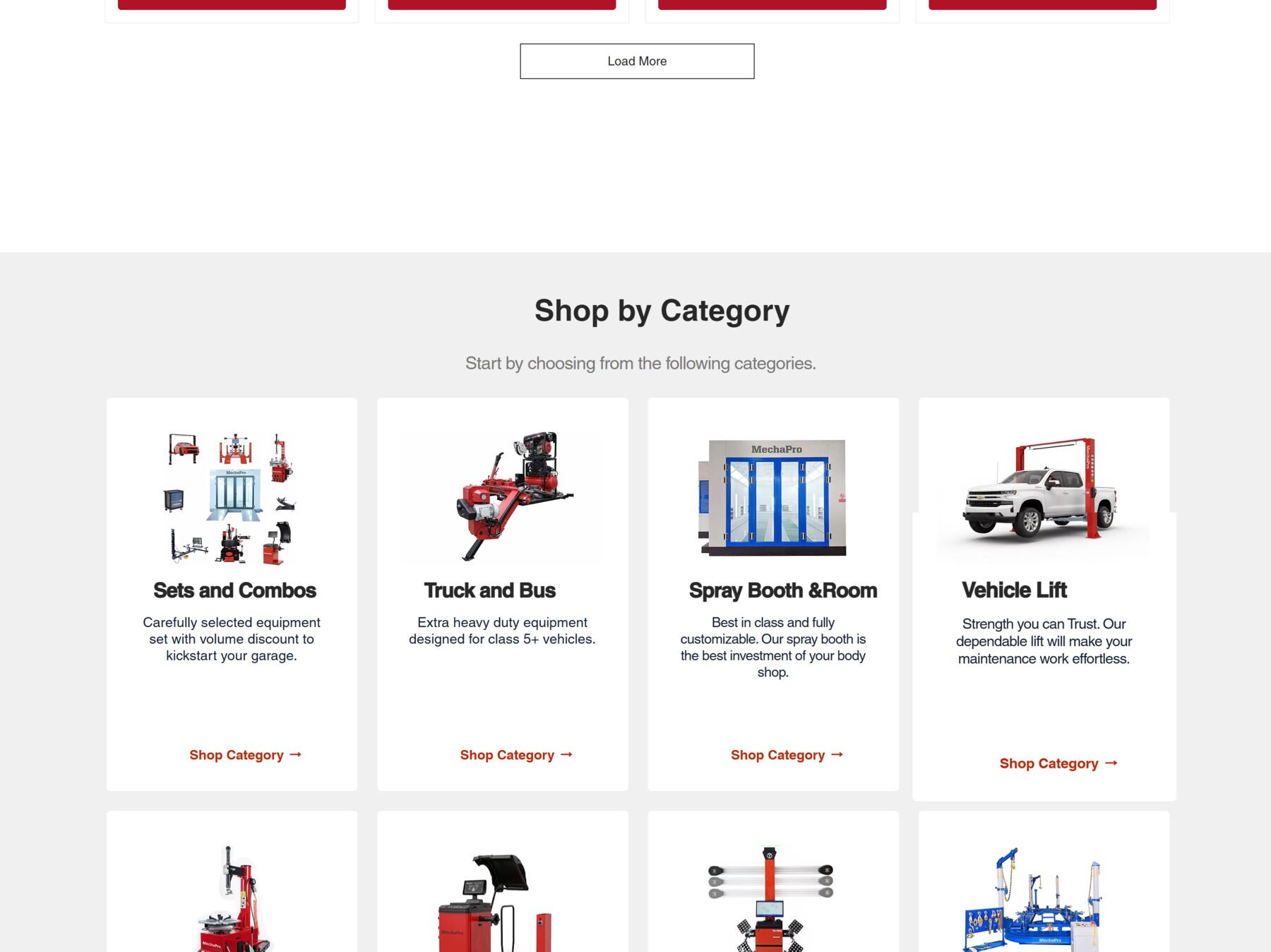
Same site, three different intents. The shopping experience routes each one without forcing a single funnel.
Already identified the equipment type. Wants to browse by category, filter products, compare specifications, and move directly to the product page.
Not looking for one machine. Looking for a complete business setup. For these users, bundled equipment sets and combo packages are the hero — solution-based purchasing, not item-by-item.
Many products require configuration decisions: lift capacity, heating system, wall material, support pattern, equipment quantity. The configurator makes customization visible inside the shopping flow — not buried in a contact form.
For high-ticket B2B products, the product page has to do more than display images and price. It has to answer the buyer's questions in the right order — same order, every page.
Many products aren't fixed-SKU: lift capacity, heating system, spray booth quantity, wall material, equipment setup. I designed the configurator so these choices show up directly on the product page — buyers learn the product is customizable while they're already evaluating it, not after.
Buying equipment one item at a time creates decision fatigue. Bundles let new shops evaluate complete packages: lift + aligner + tire changer + spray booth + compressor as one purchase. Frames products as business solutions, not isolated machines — and lifts AOV substantially.
MechaPro sells expensive industrial equipment. Trust had to be designed in, not bolted on. These modules show up throughout the buying journey — not just at checkout.
Sitewide to business addresses in lower 48 states.
Owned + manufactured + supported in the US.
Industry-leading 2+ years, extendable.
Trusted gateways · audited transactions.
ACH · Check · Cards · PayPal · Afterpay · Affirm · Klarna.
Most orders ship within 3 business days.
Money-back guarantee · no tricks, no traps.
Direct human path for complex configurations and quotes.
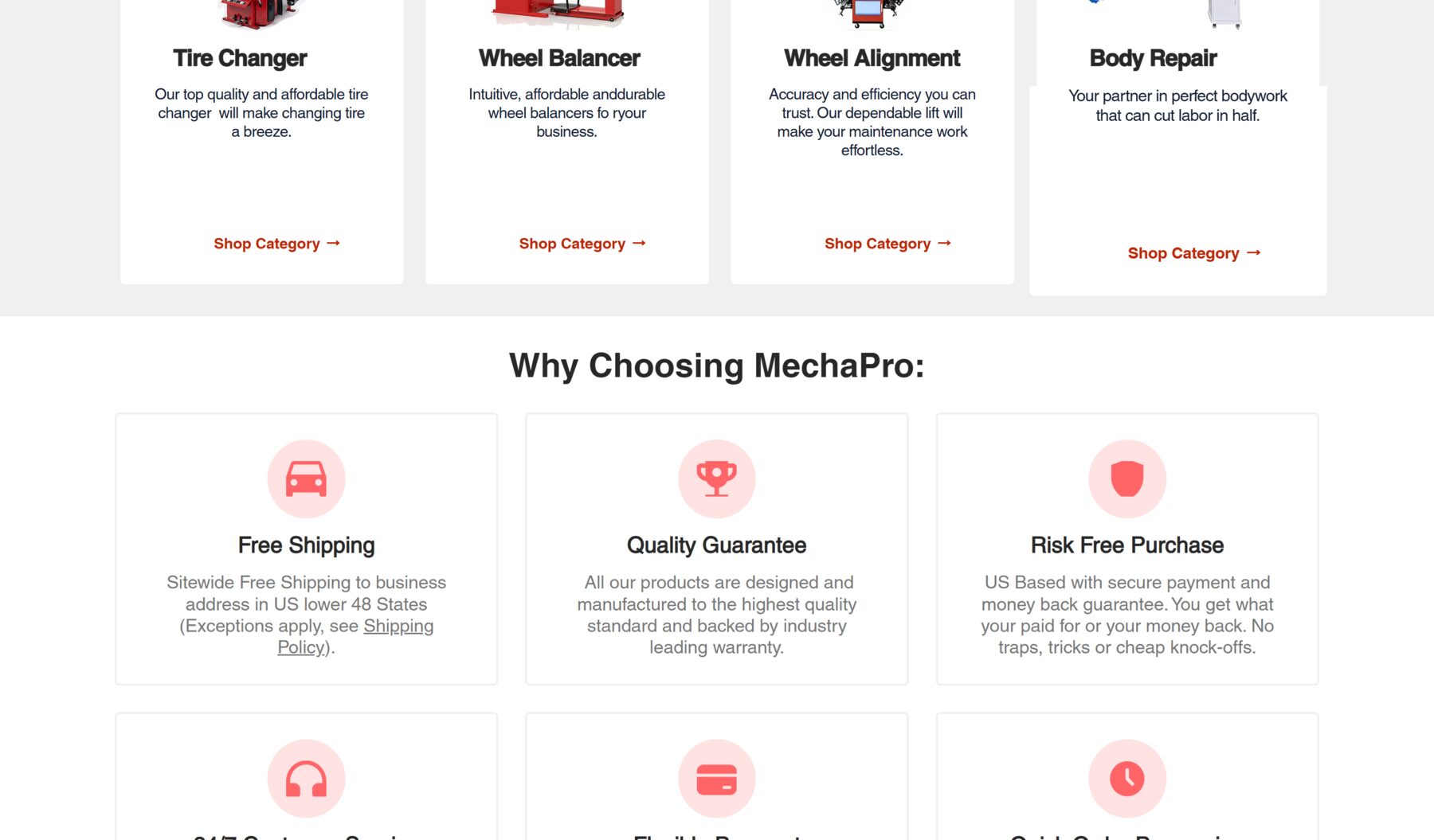
Beyond visual improvement, the project showed how UX can support complex B2B commerce by making technical products easier to understand, compare, configure, and purchase. The site became a system — not just a storefront — for selling business-critical equipment online.
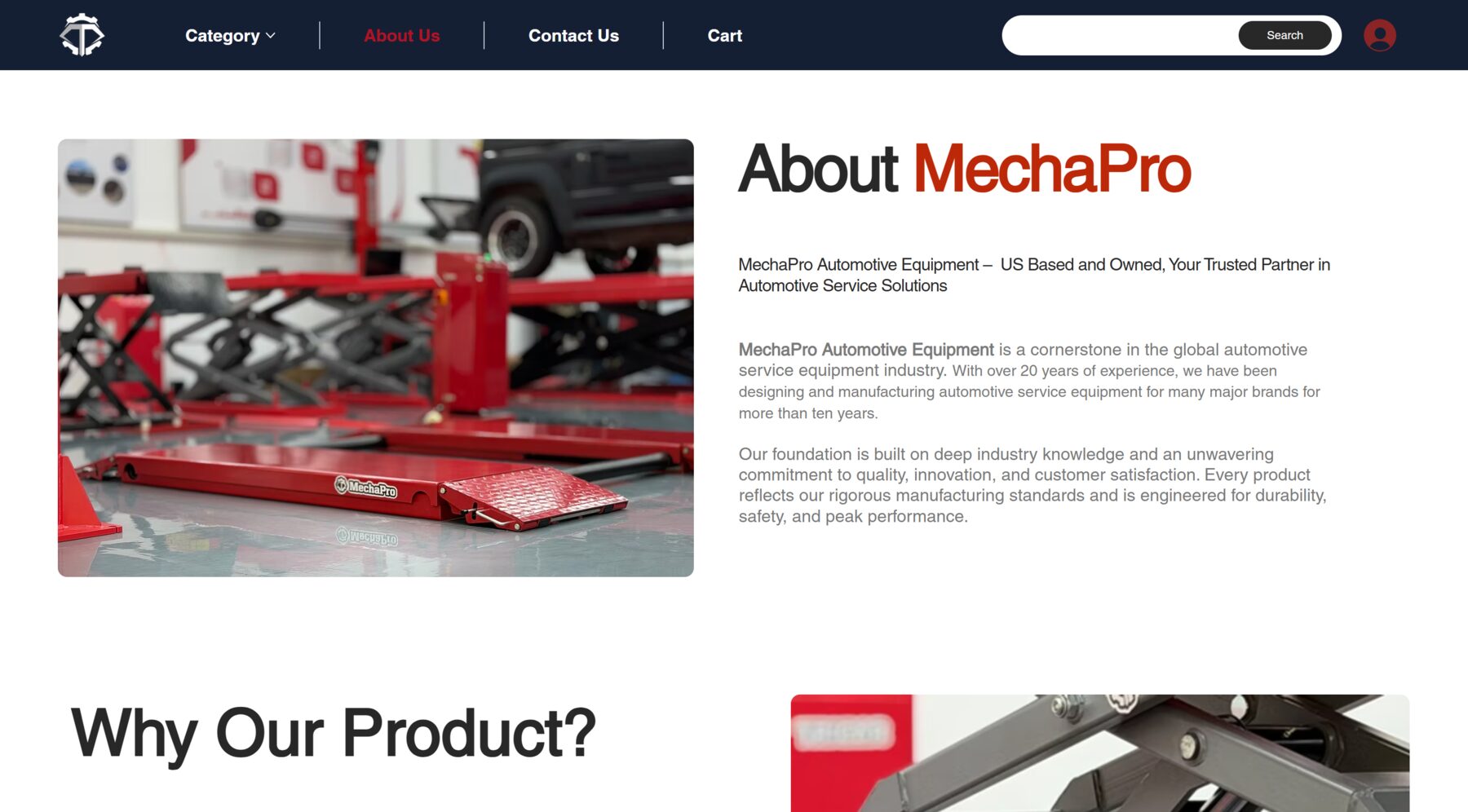
A "Vehicle Lift" category is generic. "Sets & Combos" — putting the bundle at the top of the catalog — reframes the decision around shop setup, not single machines. Same products, different mental model.
Warranty, support, payment options have to live next to the buy button. Not at the bottom of the page. Not on a separate "About" page. High-ticket buyers don't scroll to find reassurance — they bounce.
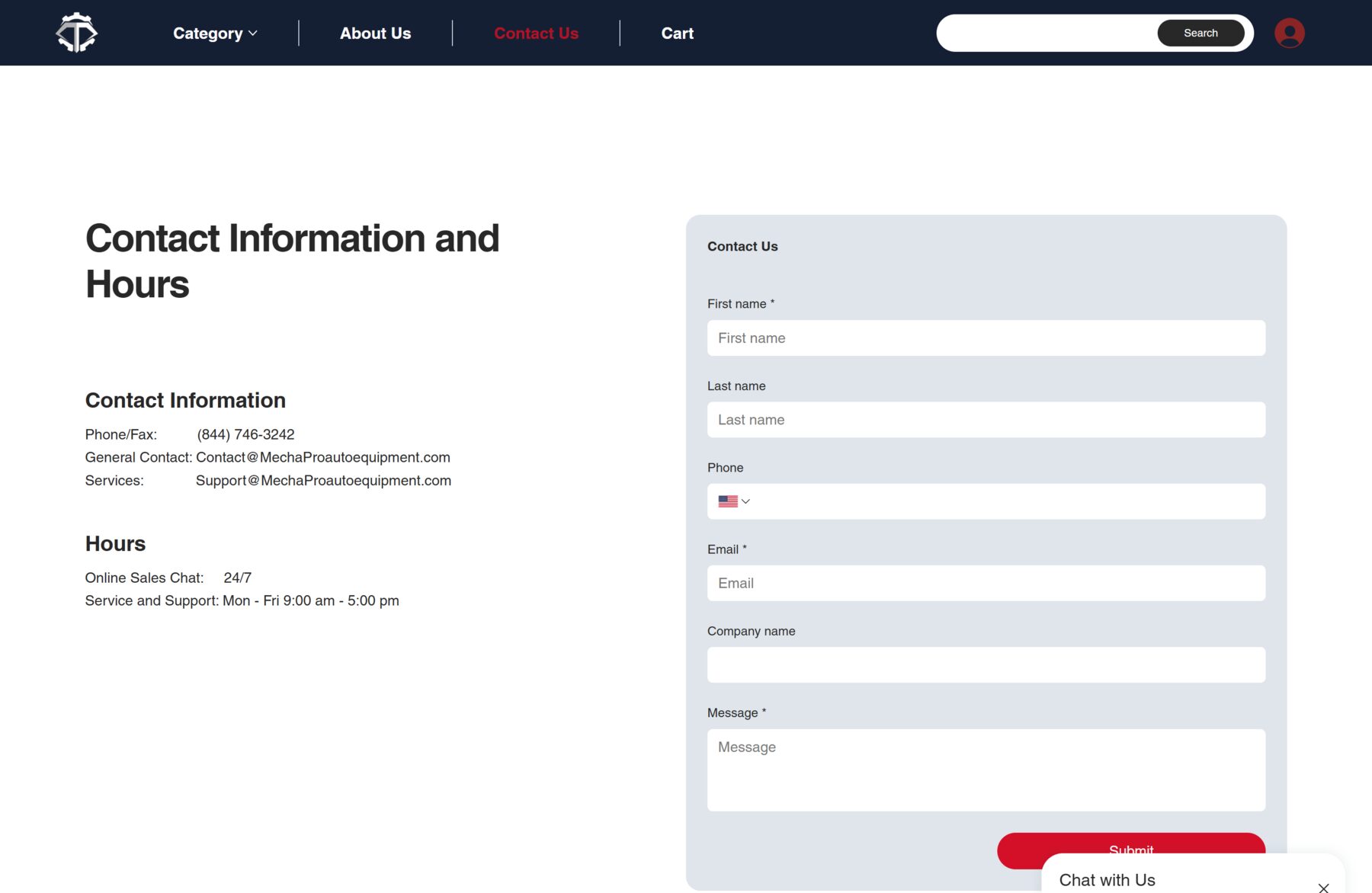
Half my customers want to click "Buy Now". Half want a phone call. The site treats both as primary — Add to Cart and Contact Sales sit side by side at the same visual weight. Neither is a fallback.
MechaPro wasn't a website redesign. It was a high-ticket B2B commerce system designed for complex purchasing decisions. The result: a structured buying experience that helps shop owners understand product categories, compare equipment, evaluate configurations, and purchase with confidence — generating $38K+ revenue in 30 days at a $9.7K AOV.